
Research & Foundational Papers
Agent Behavioral Contracts is rooted in stochastic process theory, formal methods, and non-parametric convex optimization. Explore the complete academic publications, mathematical proofs, and archival datasets below.
Agent Behavioral Contracts: Formal Specification and Runtime Enforcement for Reliable Autonomous AI Agents
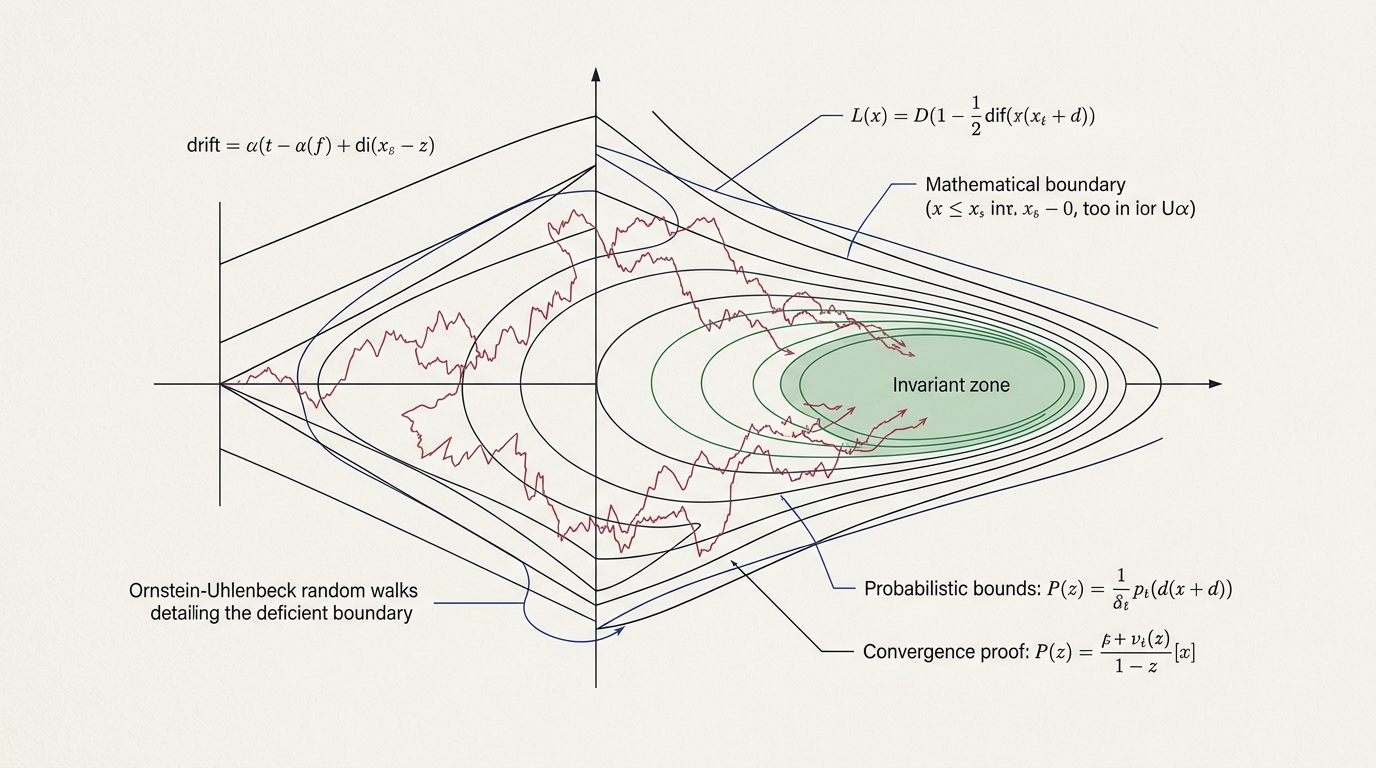
Abstract: Autonomous AI agents operate without formal behavioral guarantees, leading to compounding stochastic drift, regulatory violations, and catastrophic failures in critical domains. We introduce Agent Behavioral Contracts (ABC), a formal runtime enforcement framework combining design-by-contract principles with stochastic process theory.
We prove the Drift Bounds Theorem: for any agent with stochastic perturbation rate α and contract recovery rate γ > α, the expected behavioral drift is bounded by D★ = α / γ. We define (p, δ, k)-satisfaction to quantify non-deterministic reliability and demonstrate Θ = 0.9541 aggregate compliance across 200 benchmark scenarios on 7 frontier LLMs with < 10 ms per-action latency.
Certifying Compositional Reliability Without Assuming Independence
Abstract: Composing multi-agent workflows routinely relies on multiplying component reliabilities (RA · RB), an operation valid only under independence. In an 18,000 preregistered mission study evaluated by deterministic test oracles with zero LLM judges, we discover that paired agents from the same model family co-fail on 90.0% of missions where either fails (log OR = 6.66, φ = 0.916).
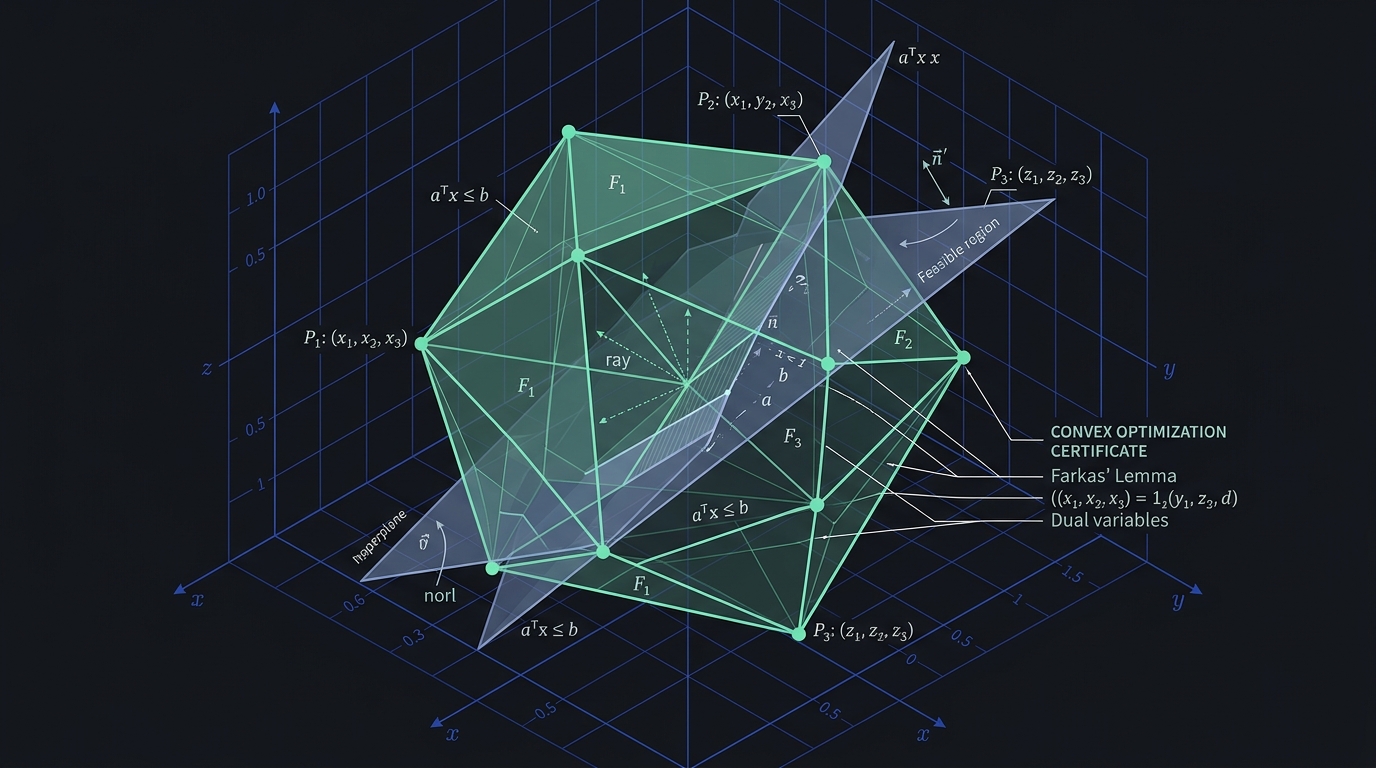
We prove that fitting parametric dependence models and bootstrapping confidence intervals creates a catastrophic failure mode: the identification gap $O(1)$ dominates the $O(n^-0.5)$ haircut, causing intervals to shrink around false parameters. We establish a non-parametric linear programming certificate over empirical moment functionals $M_10 \dots M_14$ that makes zero distributional assumptions, narrowing uncertainty bounds by 85.7% while guaranteeing anytime-valid Type-I error ($\alpha \le 0.0471$).
The Qualixar AI Reliability Research Suite (9 Papers)
AgentAssert is part of Qualixar's broader 9-paper formal AI reliability research initiative authored by Varun Pratap Bhardwaj.
The Governed Memory Operating System for multi-agent autonomous architectures with policy boundaries.
A Universal Operating System for AI Agent Orchestration with Type-C protocol and resource sandboxing.
Formal analysis and supply chain security framework for autonomous agentic tool and skill ASTs.
Token-efficient regression testing framework with deterministic test oracles for non-deterministic AI.
The Living Brain: Biologically-inspired forgetting, cognitive quantization, and multi-channel retrieval.
Privacy-preserving multi-agent memory with Bayesian trust defense against adversarial memory poisoning.